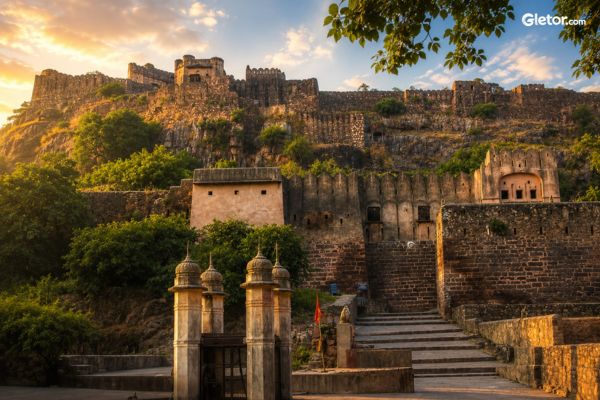
History of the Fort
Ranthambore Fort was built in the mid-10th century by the Chauhan dynasty and stands 700 feet above the surrounding plains. Its strategic location made it one of the most formidable fortresses in medieval Rajasthan, withstanding numerous sieges by the Delhi Sultanate and Mughal armies.
In 1301, Alauddin Khilji captured the fort after a prolonged siege. Later, it passed through the hands of the Hada Rajputs, the Mughals under Akbar (who seized it in 1568), and finally the Kachwaha Maharajas of Jaipur, who used the surrounding forests as their private hunting grounds.
Today, the fort is a UNESCO World Heritage Site as part of the "Hill Forts of Rajasthan" and is a major attraction within Ranthambore National Park.
Key Attractions Inside the Fort
Trinetra Ganesh Temple
The only temple in the world where Lord Ganesha is depicted with three eyes, built with red Karauli stone in the 12th century. Thousands of devotees visit every Wednesday.
Raj Bagh Ruins
The remains of a grand palace complex within the fort, now surrounded by lush vegetation where tigers often rest in the cool chambers.
Padam Talao
The largest lake in the park, located at the base of the fort. A popular spot for tiger sightings and birdwatching, especially during summer months.
Jain Temple
Dedicated to Lord Sumatinath (5th Jain Tirthankara) and Lord Sambhavanath, featuring intricate stone carvings and a peaceful atmosphere.
Architecture & Design
The fort spans 12 km in circumference and features massive gates, intricate carvings, step-wells, and palaces. Notable structures include Toran Dwar, Mahadeo Chhatri, Sametonki Haveli, and Battees Khamba. The fort's water harvesting systems, including several tanks and reservoirs, ensured self-sufficiency during prolonged sieges.
The presence of both a mosque and a temple within the fort precincts bears testimony to the diverse cultural influences that shaped its history. The fort offers panoramic views of the national park, making it a photographer's delight.